
About the Override
Why An Override Now?
Are There Any Other Options?
Why not wait until FY28?
What If The Override Doesn’t Pass?
How Much Is The Override?
How Will The Override Affect My Taxes?
When Will There Be Another Override?
How does this compare to other towns’ recent overrides?
Where Can I Learn More?
To learn more about how overrides work in general, see our FAQ.
Why An Override Now?
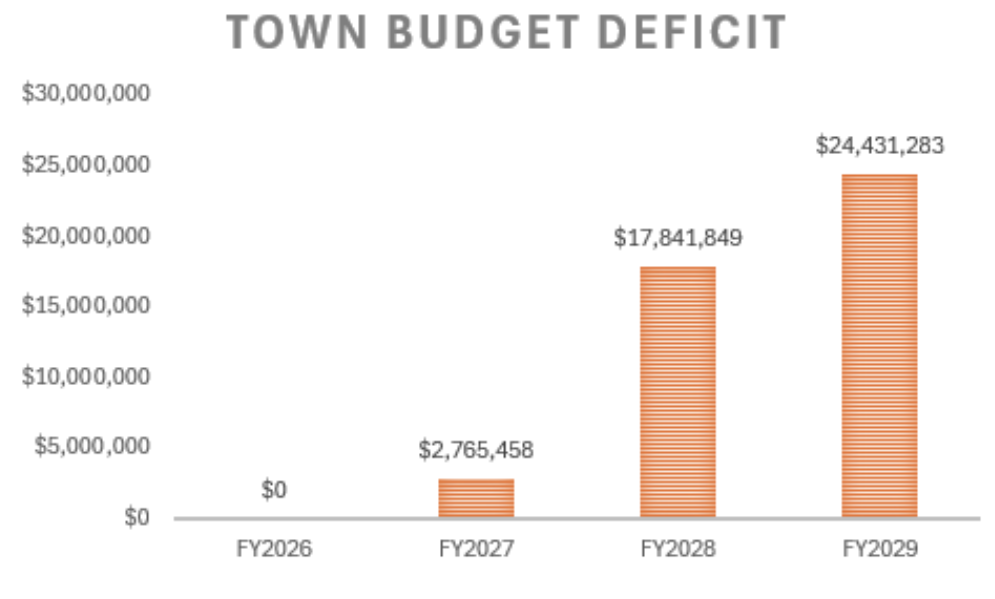
We need an override now because we are facing steep deficits and must, by law, balance our budget. Without an override, Arlington must cut $2.7M from the FY27 budget, which starts July 1, 2026, and use the last of the override stabilization fund*. With nothing left in the fund, Arlington would have to cut $17.8M in FY28 and $24.4M in FY29 to balance the budget without an override.
For more about why there is a deficit, see the Arlington’s Budget page.
*Money is put in an override stabilization fund after an override passes, and pulled out gradually over the next several years to try to hold off the next override as long as possible.
Are There Any Other Options?
The Town and Schools have made as many cuts as they can without drastically impacting services. You can read about the cuts that have already been made on our Proposed Cuts page. For more details about the cuts, increased expenses and limited revenue options, see our Arlington’s Budget page.
Why not wait until FY28?
It’s true that the most severe and painful projected cuts would not occur until FY28 and FY29. However, delaying action would:
- cause real harm to town operations
- undo important progress made over the last decade
- and create instability for town and school staff—prompting some to leave for other communities.
It would also mean losing valuable time to plan for the much larger deficit projected for FY28 – and drive the cost of a 2027 / FY28 override higher. It is estimated that a delayed 2027 override would surpass $21m in size.
By passing an override now, the town can plan responsibly, provide staff with confidence that their positions will be retained, and give taxpayers the benefit of a smaller initial tax increase.
What If The Override Doesn’t Pass?
We have posted a breakdown of the proposed cuts to the schools and town services on our Proposed Cuts page.
How Much Is The Override?
On February 12, the Select Board voted unanimously to support a $14.8M override. They waited to finalize the amount until February 12 so they would have more information that could affect the size of the override: possible updates to state aid and changes to the Massachusetts Group Insurance Commission (GIC), which provides health insurance to Arlington’s employees. This amount will be built into the new total tax base moving forward if the override passes.
How Will The Override Affect My Taxes?
The operating override is divided across all residential and business owners in Arlington depending on the assessed value of their property. It will cost $92 annually for every $100,000 of assessed home value. The increase will first appear on your quarterly tax bill on starting July 1, 2026. You can look up the assessed value of your home at this website.
Use this tax calculator to understand the financial impact on your household.
Property Tax Override Impact
When Will There Be Another Override?
The Select Board voted unanimously to commit to not request another override before FY30, which begins on July 1, 2029. In other words, the town is committing to avoid another override for at least three years.
How does this compare to other towns’ recent overrides?
It’s comparable. Arlington is the third most populous town in the state, so our budget is larger than most, and our override dollar amounts are too. But per resident, the proposed override is similar to many recent ones:
- Arlington: $314
- Melrose (2025): $451
- Stoneham (2025): $379
- Belmont (2025): $311
- Milton (2024): $333
Some towns and cities (like Lexington, Cambridge, Burlington or Somerville) can avoid larger overrides longer than Arlington can, because they have substantial commercial bases and a split tax rate, or lots of new development that contributes to the tax rolls. You can learn more about why this is on our Arlington’s Budget page.
Where Can I Learn More?
The town has created a page about the upcoming ballot questions, including the override, here. It includes a property tax impact calculator similar to the one on this page. You can also check out our FAQ, Arlington’s Budget and Proposed Cuts pages.